COP31: from endorsement to implementation of the Declaration to Triple Nuclear Energy
12 Nov 2026
12 Nov 2026
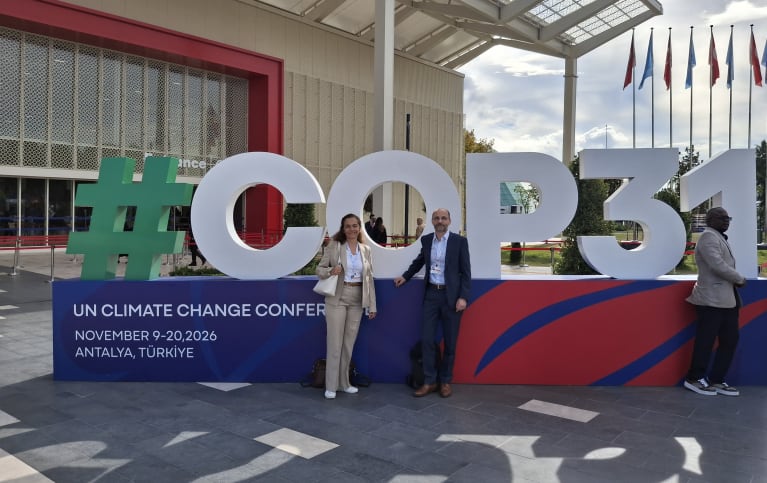
At COP31 in Antalya, ministers from France, Kazakhstan and Togo set out how their countries plan to expand or introduce nuclear power to support climate goals, energy security and industrial development. Co-hosted by the French Government, World Nuclear Association and the CSFN, the event, held on Thursday 12 November, marked progress since the Declaration to Triple Nuclear Energy by 2050 was launched at COP28 in Dubai. Opening the session, Maria Faury, Head Coordinator of the French Nuclear Sector, noted that 39 countries now endorse the Declaration.
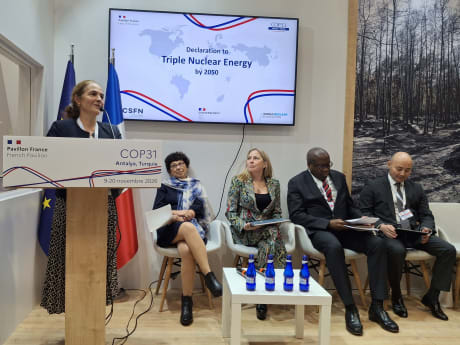
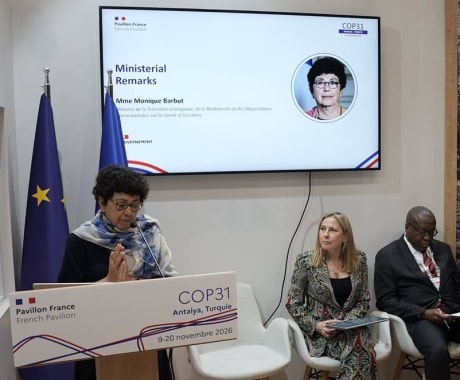
France plans to expand its nuclear programme. Monique Barbut, Minister of Ecological Transition, outlined plans for six new large reactors alongside investment in small modular reactors (SMRs), advanced reactors and fusion. She highlighted the role of nuclear power in France’s plans to reach carbon neutrality by 2050.
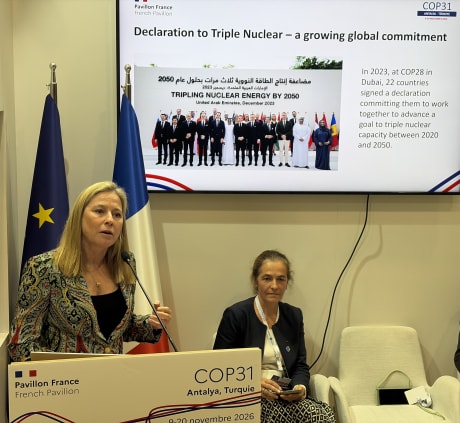
Governments and industry must turn endorsements into projects. Dr Sama Bilbao y León, Director General of World Nuclear Association, noted that around 50 countries include nuclear energy in their long-term plans. If those plans are realised, global nuclear capacity could exceed 1,400 GWe by 2050. She called for extending the operating lives of existing reactors, accelerating licensing, standardising designs and investing in fuel supply, manufacturing and skills. “Every signature is much more than a symbol. It is a demand signal,” she said. She also called for a technology-neutral approach to expanding clean electricity generation.
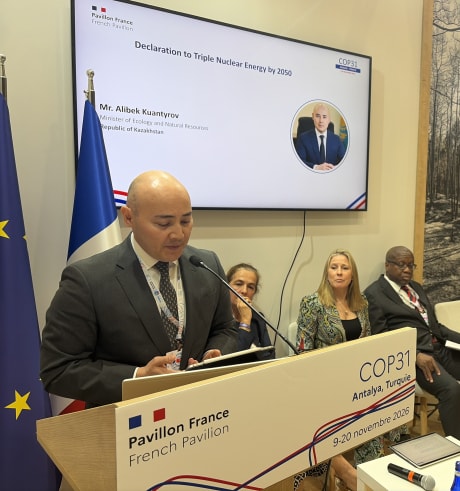
Kazakhstan sets out plans for its first commercial nuclear power station. Alibek Kuantyrov, Minister of Ecology and Natural Resources, outlined plans for two Generation III+ reactors with a combined capacity of around 2.4 GWe, with construction expected to begin in 2027. He stressed the importance of environmental assessments, monitoring and adherence to international safety standards as Kazakhstan adds nuclear generation to its established uranium industry. The Minister also mentioned the many existing partnerships with companies in the French nuclear industry.
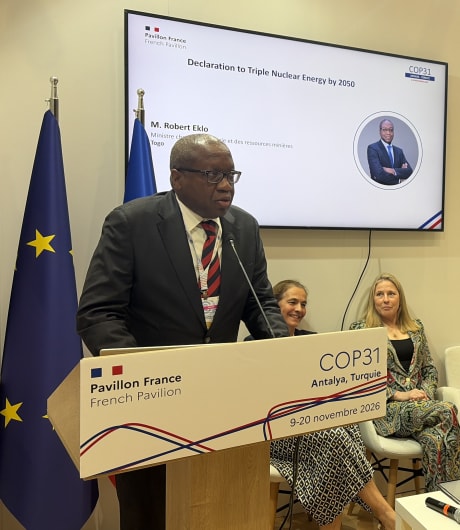
Togo links nuclear energy to industrial development. Robert Eklo, Minister of Energy and Mineral Resources, said Togo is exploring SMRs and floating nuclear power units to meet growing demand for affordable, reliable electricity. He highlighted the need to train engineers and skilled workers and invited participants to the Nuclear Energy Innovation Summit for Africa in Togo on 1–3 June 2027.
Closing the session, Maria Faury highlighted how nuclear energy and renewables can work together to meet rising electricity demand.